

At TekneOilfield, we offer the complete line of premium flanges that are compliant to ASME, ASTM, API as well as international standards that are trusted for upstream, midstream as well as downstream uses. The article below will look at 6 of the frequently utilized flanges for the petroleum and natural gas industry.
Seven years later, we are in an environment that has gone cut in significant ways to save money due to the global economic downturn and also has remarkably low oil prices, and it is likely that the attitudes towards leaks are not changing.
Knowing the basics of connections, joints, and the most popular types of flanges that are employed within the industry of oil and natural gas is an essential necessity to ensure that these standards of safety and standards remain the same. To ensure that you’re always acquainted with these, here are six of the most popular kinds of flanges, along with an explanation of the purpose they are most suitable for:
For the petroleum and natural gas industry, each connection must function perfectly. The high pressure, extreme temperatures as well as corrosive fluids and continuous operation mean that one small leak could cause costly downtime or safety hazards. This is the reason flanges—the elements used to connect valves, pumps, pipes, and other equipment, play an important part in the safety and efficiency of operations.
Weld-neck
Fully equipped with a tapered hub, these flanges can be recognized and can be used in high-pressure conditions. This flange can be particularly beneficial when bent repeatedly.
Slip-on
A flange that is put over the pipe before being is welded on both sides to improve strength and stop leakage. An option that engineers prefer to use for weld necks due to their lower price.
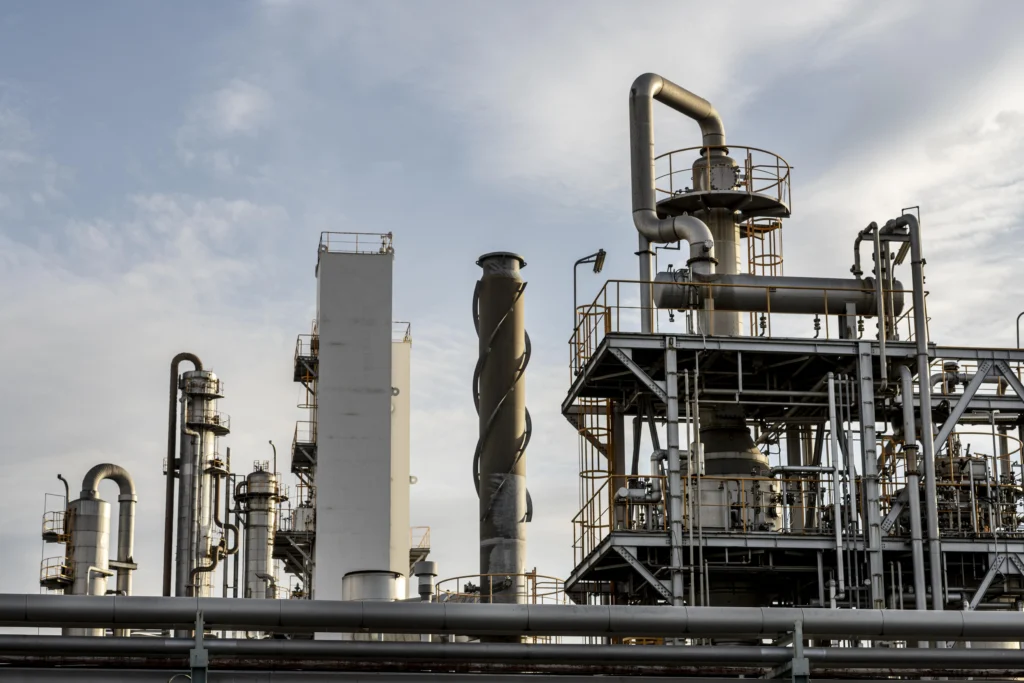
Different types of flanges that are used in the oil and gas industry
Lap-joint
In combination with the lap joint stub end, the flange is placed over the pipe, but is not secured, as opposed to the slip-on. Instead, the flange will be fixed through the pressure that is transmitted to the gasket through the pressure exerted by the flange against the inside of the lap.
Threaded
When needed in certain circumstances, the threaded pipe flange could be connected to the pipe, but not weldable. They are generally placed on pipes with a thick wall thickness. They are things that are used to making an internal thread.
Blind
Produced without a bore, these flanges are utilized to cover the edges of piping, valves or openings in pressure vessels. They are also ideal for applications with high temperatures.
Socket-weld
With a static strength that is equal to the flange that is slip-on, the socket-weld connects to the pipe by a single fillet weld that is located on the outside of the flange. Because of corrosion, certain processes will not permit this flange.
Functions of Different Flanges
- For applications that require high pressure and long-lasting joints, the welding neck, slip-on, and socket weld flanges are the best choice.
- For piping systems with lower pressure, Threaded flanges are the way to use if there are no vibrations.
- Lap joint flanges are favored for joining the stub end or to ease the alignment of bolts that connect the two mating flanges, or to reduce the price of noble materials used in high-quality Flanged joints.
How to Choose the Right Flange for Oilfield Applications
The selection of the correct flange is essential to ensure long-term safety, performance as well as cost-efficiency for oil and gas production. A wrong choice could cause premature corrosion, leakage, system shutdowns and catastrophic failures. Procurement and engineering teams have to be aware of a range of technical considerations before deciding which flange is suitable for the requirements. Here are the most important aspects to be considered:
1. Medium (Oil, Gas, Chemical, Seawater)
The kind of fluid that is flowing into the pipelines is the most important and most important aspect.
Oil
- It requires materials that can are resistant to the sour service (H2S) as well as wax and sludge.
- Carbon steel and low-alloy steel flanges are very common.
Gas
- The high pressure conditions require greater strength in flanges (WN, RJ).
- The Weld Neck as well as Ring Type Joint flanges are preferred.
Chemical
- For corrosion-causing chemicals, you need stainless steel Duplex and Super Duplex or flanges made of special alloys (Inconel, Hastelloy).
Seawater / Offshore
- Chloride-rich seawater accelerates corrosion.
- Duplex, Super Duplex, Nickel Alloy, or coated carbon steel flanges are utilized.
Tips: Always match the material of the flange with the corrosion resistance of the medium to ensure longer service longevity.
2. Pressure & Temperature Requirements
Flanges have to be able to withstand the highest pressure and temperature in all conditions.
High Pressure (Class 600 to 2500)
- It is recommended to weld Neck and Ring Type Joint flanges are suggested.
- Separators are used in wellheads as well as high-pressure gas lines along with offshore topsides.
Medium Pressure (Class 300 to 600)
- The Slip-On Socket Weld Or Lap Joint Flanges might be appropriate.
Low Pressure (Class 150 to 300)
- Faces that are flat Face as well as Slip-On Flanges are typical in environments with low stress.
How Temperature Affects Selection
- A decrease in temperature can weaken flanges in time.
- Materials such as A105 F316 and Duplex can withstand higher temperatures better than steel that is mild.
Engineering Insights: Pressure rating decreases when temperatures increase. Always look up ASME B16.5 chart.
3. Corrosion Level & Environmental Conditions
Corrosion is among the most significant challenges encountered in oilfields. The flange you choose should be according to the exposed area:
Highly Corrosive
- Offshore platforms, seawater injection lines
- Utilize: Duplex, Super Duplex Nickel Alloys or specially-coated flanges.
Moderately Corrosive
- Petrochemical units, refineries
- Use for Stainless Steel (304/316) Alloy steel.
Low Corrosive
- Water lines, utility lines, and water
- Use: Carbon steel (A105, A350 LF2).
NOTE: For corrosive environments take into consideration the RTJ (Ring Type Joint) Flanges to stop gasket corrosion.
4. Size, Schedule & Bore Compatibility
A flange should fit the size of the pipeline as well as thickness and diameter for a perfect fit.
Size
- It must be proportional to the nominal pipe dimension (NPS).
Schedule
- Reflects the thickness of the wall pipe (SCH 40, 80, 160).
- A mismatched bore in the flange can lead to turbulent joints or weak joints.
Bore Types
- Standard bore
- Large bore
- Small bore
Tips: Weld Neck flanges provide precise bore-to-bore matching for gases and liquids with high flow.
5. Maintenance Requirements & Accessibility
The maintenance plan of the system can also influence the selection of flanges.
Frequent Maintenance
- Lap Joint Flanges are great since they are easily adjusted and then removed.
- They can reduce the time spent during inspections.
Limited Maintenance Access
- Weld Neck as well as Socket Weld Flanges provide long-term durability with minimal maintenance.
High-Vibration Environments
- Make use of flanges that have butt-welds as well as strong joints (WN).
- RTJ gaskets offer secure sealing against vibration and shock.
Operational Insights: Choose flanges that make it easier to shut down, inspect or repair schedules to cut down on project costs.
Conclusion
In the field of oil and gas that operate under extreme temperatures, pressures as well as corrosive environments and constant demand, the durability of each component is crucial, particularly the flanges. These seemingly basic connectors play a crucial part in ensuring the integrity, performance and safety of the entire pipeline networks. From offshore wellheads in the upstream region and offshore platforms through refineries to petrochemical plants and distribution pipelines, the proper flange design could mean the difference between a smooth operation and expensive downtime.
Understanding the various types of flanges Weld neck Slip on blind socket, Weld threaded, Lap Joint helps procurement professionals choose the most appropriate choices for their particular needs. Each type of flange offers distinct advantages based on the type of medium being used, the system’s temperature and pressure levels, access for maintenance and corrosion exposure. Making an educated choice guarantees fluid flow leak free connections, easy maintenance less chance of failure and greater overall system reliability.
This is a great reminder that financial planning isn’t just about numbers; it’s about aligning your money with your life goals. Physician Lifecycle Planning can help you make the most of your earning potential while ensuring you’re also prioritizing your well-being and quality of life.